
Mini Mock —Reading & UoE
Timed mini mock across all six Reading parts
PET parts in this lesson · mixed-skill spiral
Why this lesson now? First timed mock — every Reading part from M01–09 returns here.
CEFR Pathway · You are here
Get ready · 01
5 minGet talking
Which Reading part takes you longest? Which is fastest?
Name ONE technique you've learned for each Reading part so far.
Mini mock = 35 minutes timed. Where will you save time?
Grammar for the Exam · 02
8–10 minThe six parts at a glance
Part 1 short notices · Part 2 match 5 people to 8 texts · Part 3 one long text with 5 multiple-choice questions · Part 4 gapped text (put sentences back) · Part 5 gap-fill (choose one word) · Part 6 gap-fill (type one word).
Mini-mock pacing: spend roughly 6 minutes per part. If a part takes you 8+, that's your priority for revision next week. Don't sit on one item — flag, move on, return if time.
→ Part 1: 5 short notices, choose A/B/C → ≈4 min.
→ Part 2: match 5 people to 8 short texts → ≈7 min.
→ Part 3: one long text with 5 questions → ≈8 min.
→ Part 4: 5 gaps, choose from 8 sentences → ≈7 min.
→ Part 5: 6 gaps in a text, choose from 4 words → ≈4 min.
→ Part 6: 6 gaps in a text, type one word → ≈5 min.
Question 1.Which Reading part has the longest text?
Question 2.Which part asks you to type a word into each gap?
Question 3.Which part gives you 8 sentences to slot into 5 gaps?
Quick check 1.Best mini-mock move when you're stuck on item 3 of 6:
Exam Vocabulary · 03
5–7 minWords & phrases to own
Activation · Personalise · Recycle
Use today's exam vocabulary about your OWN exam plan.
Ask your partner
- Which is your weak part right now?
- How do you pace yourself in a 45-min exam?
- Would you ever leave an answer blank? Why / why not?
Rank the Reading parts from EASIEST to HARDEST for you.
- 1Part 1 notices
- 2Part 2 matching
- 3Part 3 long text
- 4Part 4 gapped text
- 5Part 5 cloze
- 6Part 6 open cloze
Then compare with a partner — justify your top choice.
Write a 30-word plan for the next 2 weeks based on your weakest Reading part.
What to do
PET Reading Part 2 — Match each of the 5 people to the best of the 8 library spaces.
Tap a person, then tap the text that best matches their needs.
The 5 people
The 8 texts
Pronunciation for Speaking · 04
3–4 minReading instructions aloud quickly
Exam instructions repeat the same phrases — train your eyes to skip them.
- • For each question, choose the correct answer.
- • Read the text and answer the questions.
- • Write ONE word for each gap.
- • There are three extra sentences you do not need.
Reading Skills · 05
8–10 minPET Reading Part 3 — Mini-mock text: The Library That Reads Back
When you walk into the new public library in Helsinki, the first thing you notice is the noise. Children are laughing. A young man is recording a podcast in a glass booth. Someone is using a sewing machine. There isn't a single 'SILENCE' sign in the building.
'Libraries used to be temples for books,' says manager Anna Korhonen. 'We've decided to flip that. Books are still here — half a million of them — but the building belongs to its community first.' Visitors can borrow sewing machines, drills, even ukuleles. There's a free kitchen, a recording studio and a tiny cinema.
Not everyone is happy. Some older residents complain that the noise makes it harder to study. The library has responded by adding two glass-walled silent rooms upstairs. 'We didn't want to lose readers,' Anna admits, 'we just wanted to add everyone else.'
The numbers tell a story. Visits have tripled since the redesign. New library cards are up by 60%. Most surprisingly, book lending — which was supposed to be the loser in this revolution — has actually grown.
Question 1.What surprises visitors when they enter?
Question 2.What can you borrow that isn't a book?
Question 3.How did the library respond to complaints?
Question 4.What does the writer find most surprising?
Question 5.The writer's main purpose is to…
What to do
PET Reading Part 1 — Read each notice and choose A, B or C. (5 items)
Please return borrowed tools to the front desk. Books → ground-floor returns.
1.What does the sign say?
2.What must the member do?
3.Why is Anna writing?
OPEN MIC NIGHT
Friday 8pm. Sign up at the desk by 6pm — bring your own instrument!
4.If you want to play, you must…
QUIET ROOM RULES
Phones on silent. No food. Stays under 90 minutes — others may be waiting.
5.What can you bring into the room?
What to do
- 1.PET Reading Part 4 — Choose the sentence that fits each gap.
- 2.There are 3 extra sentences.
Read the short passage. Five sentences are missing.
Sentence options
Listening Skills · 06
8–10 minPET Listening Part 4 — Interview: Anna on the new library model
Listening audio
Tap play to listen. Replay as many times as you need.
Show transcript
Interviewer:Anna, weren't you worried that the new layout would push out serious readers?
Anna:Honestly, yes — at first. But once we added the silent rooms upstairs, the complaints almost stopped overnight.
Interviewer:What's the most-borrowed 'non-book' item?
Anna:Drills, easily. We have twenty and they're always out. Ukuleles are second.
Interviewer:Any advice for other librarians?
Anna:Add, don't replace. Keep your books. But ask your community what else they need from the building.
Question 1.What stopped the complaints?
Question 2.What is the most-borrowed non-book item?
Question 3.Anna's main advice is:
What to do
- 1.PET Listening Part 3 — Complete the notes.
- 2.ONE or TWO words per gap.
Part 3 audio
Tap play to listen. Replay as many times as you need.
Helsinki Public Library — Visitor Notes
Information sheetUpdated: March 2026
- Library manager:
- Number of books: half a
- New silent rooms are located:
- Most-borrowed non-book item:
- Visits have since the redesign
- New library cards up by:
Exam Strategy · 07
5 minPET Reading — full-paper pacing under 45 minutes
Budget 6 minutes per part. Mark, move, return.
Task
Today's mini-mock is 35 minutes (not 45). The compression forces honest pacing. Anything you don't finish IS your weak part.
Example
If you finish R1, R3, R5 quickly but stall on R4, that's a linking problem — revisit Lesson 6 this week.
Writing Task · 08
5 minPut it in writing
Q1.PET Reading Part 6 (open cloze) — type ONE word: 'The first thing you notice ____ the noise.'
Q2.Type ONE word: 'Books are still here — half a million ____ them.'
Q3.Type ONE word: 'Visits have tripled ____ the redesign.'
Q4.Type ONE word: 'We didn't want ____ lose readers.'
Q5.Type ONE word: 'Most surprisingly, book lending ____ actually grown.'
Q6.Type ONE word: 'It is not as quiet ____ before.'
PET Writing Part 1 (email, ≈100 words). An English friend is moving to your city and asks: 'What's your favourite public space, and why should I visit it?' Reply covering: 1) where to go, 2) why you love it, 3) when to visit, 4) one tip. Use 'apparently', 'most surprisingly' or 'thankfully' once.
Your writing draft
0 words SavedShow model answer & examiner comment
Hi! Definitely the new public library — yes, really. It looks like any normal library from outside, but inside there's a recording studio, a tiny cinema, and you can even borrow a drill. Apparently, visits have tripled since they redesigned it. I usually go on Saturday mornings — it's busy but happy. Don't try to study there during the day; go upstairs to the silent rooms instead. And most surprisingly, you'll meet locals. People actually talk to each other! Let me know when you're free and I'll meet you there. Alex
Examiner comment
| 5 | All content points covered; consistent style; range of structures; minor errors only. |
| 3 | Content mostly covered; mostly suitable style; some range; errors don't stop the reader understanding. |
| 1 | Limited content; intrusive errors; very basic structures; under-length. |
Speaking Task · 09
10–15 minMake it a real conversation
PET Speaking Part 3 — discussion task. Look at the visual prompt of community spaces and decide together which TWO are the most important for a town.
Examiner
"Here are some places in a town. Talk together about how important each one is for the community, and then decide which TWO are the most important."
Discuss together
Which TWO spaces are the MOST important for a town?
Now decide together
Now decide together: which TWO would you choose, and why?
Useful discussion language
What to do
PET Speaking Part 2 — describe ONE photograph for 1 minute.

Candidate A — A busy outdoor market
Need help? Show prompts (try describing with no help first)
- • What can you see?
- • Where do you think this is?
- • How do the people seem to feel?
- • Do you enjoy shopping in places like this? Why / why not?
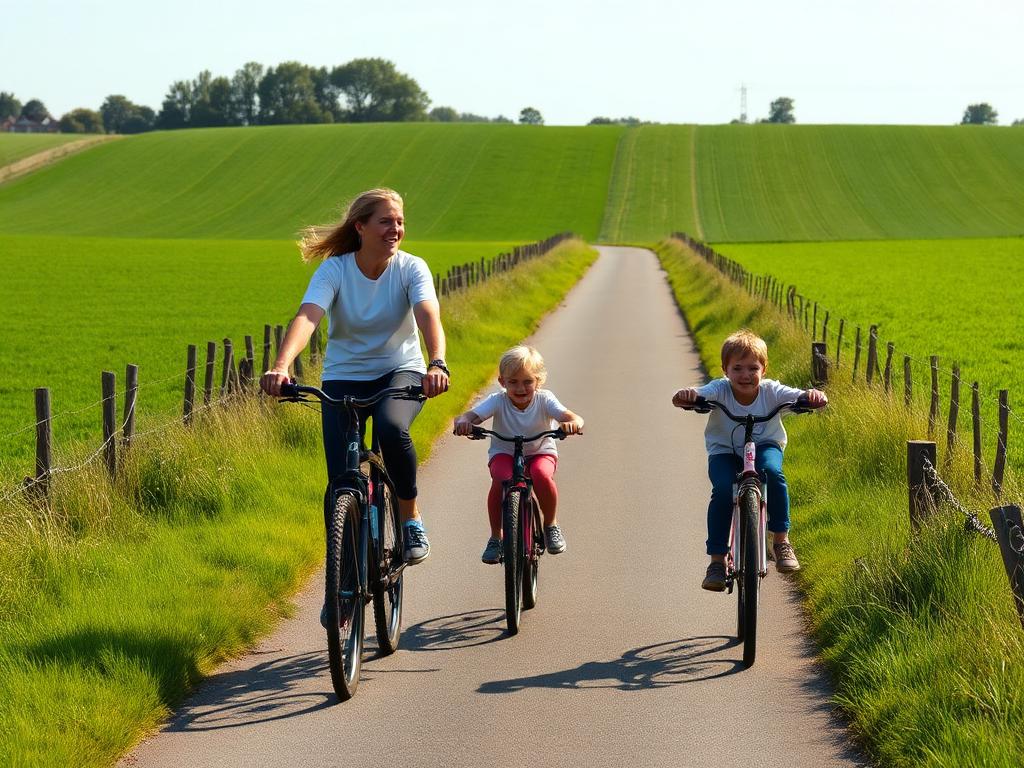
Candidate B — A family cycling in the countryside
Need help? Show prompts (try describing with no help first)
- • What can you see?
- • What kind of day do you think it is?
- • How do the people probably feel?
- • Would you enjoy a day out like this? Why / why not?
Useful phrases
- • I can see…
- • It looks like…
- • They seem to be…
- • In the background…
- • I'd guess they're…
Optional · Teacher-led
Teacher Activities
Turn the mock into a self-coaching session. ~30 min total
Homework · 10
Take-homeTake it home
Self-study — everything you need is included below. All four skills are covered so you keep the spiral going between lessons; pick the order that suits you.
PET Reading self-diagnostic — decide which Reading Part (1/2/3/4/5/6) is YOUR weakest, then re-do the matching lesson.
Your response
0 words SavedMaterials included
Score card from today
Which lesson to redo
Attempt the task first, then check your answers.
PET Writing Part 1 mock — reply to Sam's email below in 100 words. Cover all four notes.
Your response
0 words SavedMaterials included
Stimulus email
4 notes
Attempt the task first, then check your answers.
PET Speaking Part 2 mock — record a 60-second description of any real photo from your camera roll.
Your response
0 words SavedMaterials included
Photo choice
60-second frame
Attempt the task first, then check your answers.
Recap · 11
2–3 minWhat you've learned
- Mini-mock = 35 min, all 6 Reading parts.
- Pace: ~6 minutes per part. Mark, move, return.
- Unfinished items reveal your weak part — that's your priority.
- Use the right speed per part: skim (R3), scan (R2), intensive (R5/R6).
- Confidence comes from REPS, not from one perfect attempt.
Need more practice?
Optional · your lesson progress stays the sameDetail, gaps and cohesion
Practise this exam skill
How to attack each paper
Practise this exam skill
Habits vs right now
Practise this exam skill