
Exam Review Lab 02 —Reading between the lines + photo turn
Mixed practice across R-P2 · R-P3 · L-P3 · L-P4 · S-P2 · W-P2 article — exam-paced. Revision only · recycles Modules 04–05 — no new language.
PET parts in this lesson · mixed-skill spiral
Why this lesson now? Second spiral checkpoint — Reading 2 and Speaking 2 return.
CEFR Pathway · You are here
Exam Boost · Performance Session
A progress checkpoint, not a test.
Recycle this phase's language through challenges, mini-tasks and longer speaking turns. Aim for fluency, not perfection — replay anything, skip nothing.
Get ready · 01
5 minGet talking — no pressure
Which PET part has improved most for you since Lab 01 — and which one still feels slow?
Pick any photo on your phone. Describe it out loud for 60 seconds using 'It looks as if…' at least once.
Pick ONE: (a) faster Reading 2 matching, (b) cleaner note-completion spelling, (c) fuller photo descriptions. Tell your teacher.
Grammar recap · 02
8–10 minPassives + conditionals recycle (Modules 4–5)
Passive: focus on the THING done, not the doer. First conditional: real future. Second conditional: unreal / imagined.
Modules 4–5 introduced the passive (Reading 3 factual texts, Writing 2 articles) and the first/second conditionals (Speaking 4, Reading reading between the lines). PET rewards learners who use these accurately in ONE clean sentence, not learners who force them everywhere.
→ The museum was built in 1902. (passive — focus on the museum)
→ If it rains tomorrow, we'll stay in. (first conditional — real future)
→ If I lived by the sea, I'd swim every morning. (second conditional — imagined)
→ This dish is made with fresh tomatoes. (passive — recipe / factual)
→ If you asked me, I'd say it's worth it. (softener — second conditional)
Challenge 1.The bridge ___ in 1889.
Challenge 2.If I ___ more time, I'd learn Italian.
Challenge 3.If it ___ tomorrow, we'll cancel the picnic.
Challenge 4.This bread ___ every morning at 6am.
Challenge 5.If she ___ the earlier train, she'd already be here.
Build the sentence → spot the natural chunks → say it aloud → reply like a real conversation.
1.Rebuild the sentence — then say it aloud.
2.Rebuild the sentence — then say it aloud.
3.Rebuild the sentence — then say it aloud.
Quick check 1.Which sentence describes an IMAGINED situation?
Quick check 2.Which is the most natural PET Speaking 2 opener?
Vocabulary recap · 03
5–7 minRecycle your toolkit
read fast to get the general meaning
Skim a news headline now — say the topic in 5 words.
to say the same meaning using different words
Reword the sentence: 'I was extremely tired.'
to think about a past experience
When you look back on last year, what stands out?
a code used to identify a booking or order
Why is it useful to keep a reference number safe?
What to do
- 1.Revision only — every phrase here comes from Modules 4–5.
- 2.Match each one with its meaning.
Tap an item on the left, then tap its match on the right.
What to do
Sort the recycled phrases by the module where you first met them.
Activation · Personalise · Recycle
Reactivate Modules 4–5 language out loud — nothing new here, just faster recall.
Ask your partner
- Say the main idea of the last article you read.
- Skim a news headline now — say the topic in 5 words.
- Reword the sentence: 'I was extremely tired.'
"Why might someone need flexible working hours?"flexible
Which of these Modules 4–5 phrases do you still forget under exam pressure? Why?
Write 25–35 words about your English progress using BOTH recycled phrases.
What to do
- 1.PET Reading Part 2 — Five people are looking for a weekend activity.
- 2.Match each person to the best of the eight options (3 extra).
Tap a person, then tap the text that best matches their needs.
The 5 people
The 8 texts
Pronunciation polish · 04
3–4 minSentence stress on content words
Stress the nouns, main verbs, adjectives and adverbs. Skate over the grammar words (a, the, of, to, was).
- • In the FOREground I can SEE a WOman WAIting for a TRAIN.
- • It LOOKS as if she's just ARRIVED from a LONG journey.
- • This dish is MADE with FRESH tomatoes and BAsil.
- • If I LIVED by the SEA, I'd SWIM every MORning.
Reading challenge · 05
8–10 minPET Reading Part 3 — Working in a museum I never planned to enter
When I finished university, I applied for jobs in advertising. What I actually got was a summer contract at the city's small maritime museum, taking tickets on the front desk. I remember telling my dad it would only be for eight weeks. That was six years ago and I'm still here.
What changed my mind wasn't the exhibits — although the shipwreck models are genuinely beautiful — but the visitors. On my third day a retired fisherman came in and stayed for two hours, pointing out to me the difference between the fishing boats his grandfather used and the ones in the display cases. Nobody had told me any of it. He knew more than the labels did.
After that summer I asked to move into the education team. My job now is to write the labels and the audio guide, and — most importantly — to interview visitors like that fisherman before their knowledge disappears. Their stories are what turns objects into a museum.
The hardest part is knowing when to stop editing. I once rewrote a single label eleven times because I couldn't decide whether to include one detail. My manager finally printed it, walked over, and pinned it up herself. She was right. The visitor doesn't need my perfect sentence — they need to keep moving.
Challenge 1.What did the writer originally plan to do after university?
Challenge 2.Why did the retired fisherman change the writer's mind?
Challenge 3.What is the writer's MAIN job now?
Challenge 4.What does the writer suggest about her own writing?
Challenge 5.What does 'They need to keep moving' mean here?
Q1.The writer expected her museum job to be short-term.
Q2.The fisherman was employed by the museum.
Q3.The writer's manager thinks she edits too much.
Listening challenge · 06
8–10 minPET Listening Part 4 — Interview with a young museum curator (extended)
Listening audio
Tap play to listen. Replay as many times as you need.
Show transcript
Interviewer:Elena, you started working here almost by accident. What was your first job?
Elena:I sold tickets on the front desk for one summer. I honestly thought I'd be doing advertising by autumn.
Interviewer:So what made you stay?
Elena:One retired fisherman, actually. He came in and told me stories the labels didn't know. That was the moment I realised museums are about people, not objects.
Interviewer:And your job now — how would you describe it?
Elena:Half writing, half listening. I write the labels and the audio guide, but the best part is interviewing older visitors before their knowledge disappears.
Interviewer:What's the hardest thing about the writing side?
Elena:Knowing when to stop. I rewrote one label eleven times last month. My manager walked over and put it up herself in the end.
Challenge 1.What did Elena originally think she'd do for a career?
Challenge 2.According to Elena, museums are mainly about…
Challenge 3.What is the hardest part of her job?
What to do
- 1.PET Listening Part 3 — Complete the museum tour booking form.
- 2.Write ONE word or a short number for each gap.
Part 3 audio
Tap play to listen. Replay as many times as you need.
Maritime Museum — Group Tour Booking
Booking formBooking ref: MM-4821
- Tour name:walking tour
- Day:
- Start time:
- Meeting point: main
- Group size (max):
- Price per person: £
Skills challenge · 07
5 minReading 2 speed + reading between the lines
Read the PEOPLE first, then scan the TEXTS for the one deal-breaker in each profile.
Task
Reading Part 2 is a matching task, not a comprehension test. The trick is to find the ONE feature that eliminates every wrong text (price, timing, group size, needs booking, etc.) rather than trying to understand every text in full.
Example
Marco: 'Sundays only, cultural, NOT a long museum visit.' → deal-breaker = short + Sunday. Only text D fits both. Commit.
Writing challenge · 08
5 minShow what you can do
Q1.Type ONE word: 'The painting was made ___ 1902.'
Q2.Type ONE word: 'This film is based ___ a true story.'
Q3.Type ONE word: 'If I ___ you, I'd book online.'
Q4.Type ONE word: 'The results will ___ posted on Monday.'
PET Writing Part 2 (article, ≈100 words). Magazine prompt: 'Is a museum still worth visiting when you can see everything online?' Use ONE passive, ONE conditional and ONE softener from the recycled linkers.
Your writing draft
0 words SavedShow model answer & examiner comment
On the whole, I still think museums are worth visiting, even though almost every object is now shown online. The main difference is scale: a photo of a shipwreck model is not the same as standing next to one. Having said that, it depends on the museum — some are still designed for tourists rather than curious people. If I ran a small local museum, I'd focus less on objects and more on stories from real visitors. That's the part that can't be downloaded, and honestly it's what keeps me going back.
Examiner comment
| 5 | All content points covered; consistent style; range of structures; minor errors only. |
| 3 | Content mostly covered; mostly suitable style; some range; errors don't stop the reader understanding. |
| 1 | Limited content; intrusive errors; very basic structures; under-length. |
Communication lab · 09
10–15 minTalk it out
PET Speaking Part 4 — In pairs, 4 minutes total. Question: 'Do museums matter in an age of smartphones?' Use PEEL and at least TWO recycled phrases from Modules 4–5 (in the foreground, based on, come across as, it looks as if…).
What to do
- 1.PET Speaking Part 2 — 1 minute per candidate.
- 2.Describe the photo, guess what's happening, and say how the people feel.
- 3.Use 'in the foreground', 'in the background' and 'it looks as if…'.
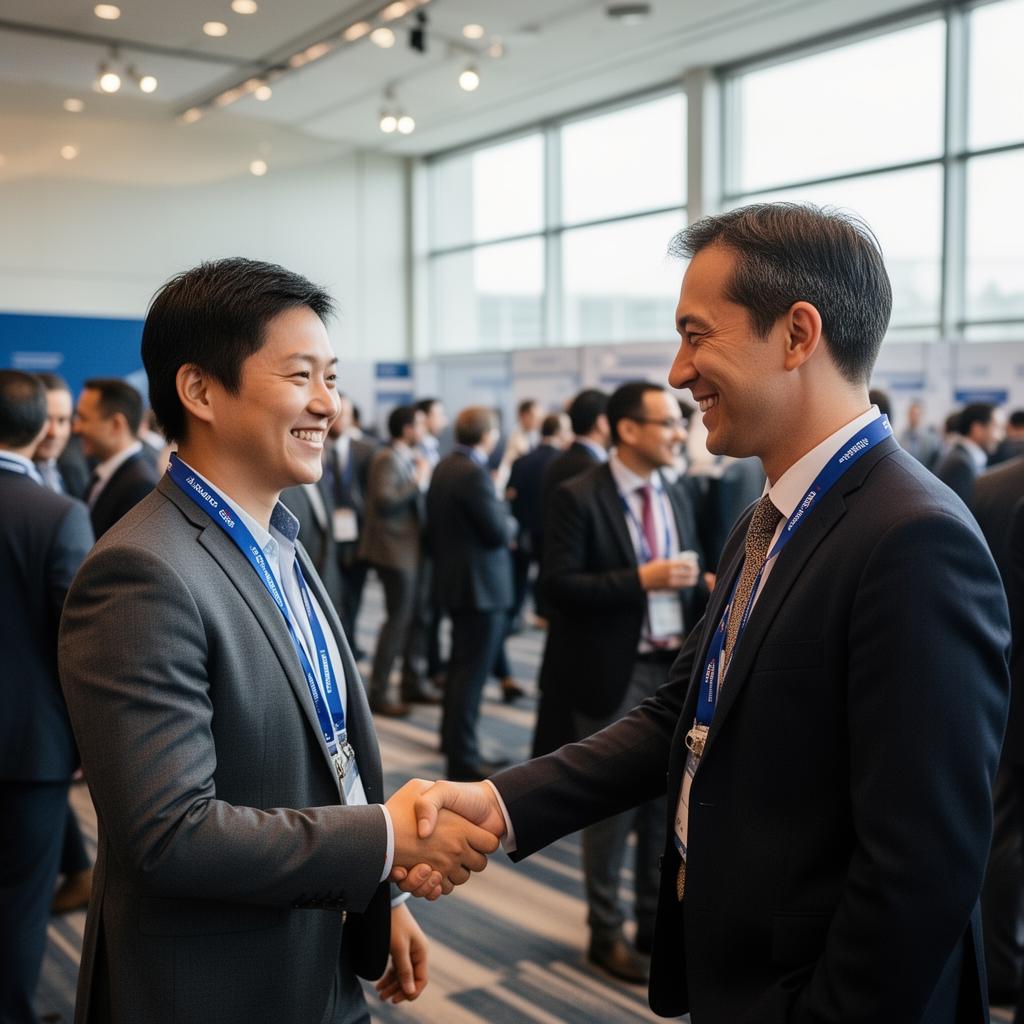
Candidate A — A busy event
Need help? Show prompts (try describing with no help first)
- • What can you see?
- • Where do you think they are?
- • What are they probably discussing?
- • How do they feel?
- • Would you enjoy this?

Candidate B — Friends in a café
Need help? Show prompts (try describing with no help first)
- • What can you see?
- • What time of day is it?
- • What are they talking about?
- • How do they seem?
- • Do you meet friends this way?
Useful phrases
- • In the foreground I can see…
- • In the background…
- • It looks as if…
- • They seem to be…
- • What strikes me is…
Show model 1-minute description
In the foreground of the photo I can see two women sitting at a small table with coffees in front of them. In the background there's a busy café counter with a queue of people. It looks as if they've just met after a while, because they're leaning in and laughing. On the whole they seem really relaxed — I'd say they're old friends.
Optional · Teacher-led
Teacher Activities
Run this lab as a mixed-skill sprint. Rotate between Reading, Listening and Speaking blocks every 10 minutes to build the exam-day switch. ~38 min total
Keep it going · 10
Take-homeExtend it at home
Self-study — everything you need is included below. All four skills are covered so you keep the spiral going between lessons; pick the order that suits you.
PET Reading Part 2 mock — re-do the 5-people ↔ 8-texts task in 8 minutes. Note the ONE deal-breaker you used per person.
Your response
0 words SavedMaterials included
Task
Deal-breaker log
PET Writing Part 2 mock — write a 100-word article: 'Is a museum still worth visiting?' Use one passive and one conditional.
Your response
0 words SavedMaterials included
Article prompt
Structures required
Attempt the task first, then check your answers.
PET Speaking Part 2 mock — record 60 seconds using 'in the foreground' AND 'it looks as if' at least once each.
Your response
0 words SavedMaterials included
Photo choice
Frame
Attempt the task first, then check your answers.
Listening recycling — read the Elena interview aloud twice. Write down 3 recycled phrases from Modules 4–5.
Your response
0 words SavedMaterials included
Interview
Recycled bank (tick 3)
Attempt the task first, then check your answers.
Wrap-up · 11
2–3 minWhat you can now do
- Reading 2 = find the ONE deal-breaker per person, then match.
- Listening 3 = write ONE word or a short number, spelling matters.
- Speaking 2 = foreground → background → guess (‘it looks as if…’).
- Writing 2 article = one clear opinion + example + softener.
- Passive + conditional = one clean use each, not everywhere.
- Difficulty is the lesson — labs are memory practice, not tests.
Need more practice?
Optional · your lesson progress stays the sameFeelings, opinions and agreement
Practise this exam skill
Detail, gaps and cohesion
Practise this exam skill
Numbers, times and spelling
Practise this exam skill