
Exam Review Lab 10 —Reading speed & smart guessing
Timing per Reading part, skim-and-scan drills, and educated guessing when you're not sure. Revision only · recycles Modules 08–09 — no new language.
PET parts in this lesson · mixed-skill spiral
Why this lesson now? Exam-focus hour attached to Module 09.
CEFR Pathway · You are here
Exam Boost · Performance Session
A progress checkpoint, not a test.
Recycle this phase's language through challenges, mini-tasks and longer speaking turns. Aim for fluency, not perfection — replay anything, skip nothing.
Get ready · 01
5 minGet talking — no pressure
How long do you currently spend on ONE Reading part before you feel rushed?
In pairs, explain the difference between skimming a text and scanning it, in your own words.
Look at a page of a book for 30 seconds only. What's it about? Don't read every word.
Grammar recap · 02
8–10 minReference words: recognising what 'it', 'this', 'one' point to
Every pronoun and linker points backwards. Find its target before you choose an answer.
Many PET Reading Part 4 and Part 6 items test whether you can track what a pronoun or reference word refers to. Fast readers don't reread the whole passage — they simply check the noun closest before the pronoun and confirm it fits logically. This is a grammar skill disguised as a reading skill.
→ The museum closed early. It reopened the next day. (it = the museum)
→ She tried the new café, and liked it a lot. (it = the café)
→ Some people prefer trains; others avoid them completely. (them = trains)
→ This is why the plan changed. (this = the reason just given)
→ One of the two options is clearly better. (one = a single item from a set)
Challenge 1.The shop closed suddenly. ___ surprised everyone.
Challenge 2.I bought two shirts, but only ___ fits well.
Challenge 3.The bridge was old, so ___ was repaired last year.
Challenge 4.Many tourists visit in summer; ___ prefer spring.
Challenge 5.The article was long, but ___ was worth reading.
Build the sentence → spot the natural chunks → say it aloud → reply like a real conversation.
1.Rebuild the sentence — then say it aloud.
2.Rebuild the sentence — then say it aloud.
3.Rebuild the sentence — then say it aloud.
Quick check 1.What does 'this' usually refer to in a Reading Part 4 gap?
Quick check 2.Skimming is best used for…
Vocabulary recap · 03
5–7 minRecycle your toolkit
to suggest without saying directly
What does 'I'm not really hungry' imply at a dinner party?
worried or nervous about something that might happen
Do exams make you anxious? Why or why not?
the level of formality expected for a piece of writing
Is an email to a friend usually formal or informal?
What to do
- 1.Revision only — every phrase here comes from Modules 8–9.
- 2.Match each one with its meaning.
Tap an item on the left, then tap its match on the right.
What to do
Sort the recycled phrases by the module where you first met them.
Activation · Personalise · Recycle
Reactivate Modules 8–9 language out loud — nothing new here, just faster recall.
Ask your partner
- Finish: 'I've lived here since…'
- What does 'I'm not really hungry' imply at a dinner party?
- Finish: 'You can borrow it as long as…'
"Do exams make you anxious? Why or why not?"anxious
Which of these Modules 8–9 phrases do you still forget under exam pressure? Why?
Write 25–35 words about your English progress using BOTH recycled phrases.
Pronunciation polish · 04
3–4 minSilent reading pace vs speaking pace
Your inner voice should read faster than you speak — don't 'say' every word in your head.
- • The museum closed early / so it reopened / the next day.
- • Some people prefer trains / others avoid them completely.
- • This is the main reason / the plan changed.
- • One of the two options / is clearly better.
Reading challenge · 05
8–10 minPET Reading Part 3 — Reading fast without reading carelessly
A common myth about reading exams is that faster readers simply 'know more words'. In fact, speed usually comes from strategy, not vocabulary size. Skilled test-takers don't read every word of a long text with equal attention — they decide, in advance, what they're looking for.
Skimming means reading quickly to understand the general topic and structure: what is this text about, and how is it organised? Scanning is different: it means searching quickly for a specific piece of information, such as a name, date, or number, while ignoring everything else.
The two skills work together. In PET Reading Part 3, for example, a smart approach is to skim the passage once for general meaning, then scan back through it to check each specific question. Trying to read every word carefully from start to finish, twice, simply takes too long — and increases the chance of running out of time on later, easier questions.
Equally important is knowing when to guess. If two options remain and time is short, an educated guess — based on grammar, tone, or a keyword — is far more reliable than leaving a blank. PET never penalises wrong answers beyond not gaining the mark, so every single question should have an answer by the end.
Challenge 1.According to the writer, what usually explains reading speed?
Challenge 2.What is scanning used for?
Challenge 3.What does the writer recommend for PET Reading Part 3?
Challenge 4.What does the writer say about guessing on PET?
Q1.The writer believes reading speed mostly comes from vocabulary size.
Q2.Skimming and scanning are described as working together.
Q3.The writer advises leaving a question blank if you're unsure.
What to do
- 1.PET Reading Part 1 — Exam-paced.
- 2.Aim for under a minute per item.
LIBRARY
Quiet study room open until 9pm. Group study room closes at 6pm sharp.
1.What time does the group study room close?
2.Where will the group meet?
3.What does the email tell candidates?
Please answer every question. There is no penalty for an incorrect answer.
4.What does the sign encourage candidates to do?
TIME TIPS
Skim first for the general idea. Scan afterwards for specific answers. Don't read word by word.
5.What strategy does the poster suggest?
Listening challenge · 06
8–10 minPET Listening Part 2 — Two classmates compare Reading strategies
Listening audio
Tap play to listen. Replay as many times as you need.
Show transcript
Leo:How do you manage to finish the Reading paper with time to spare? I always run out of time.
Mia:Honestly, I stopped trying to read every word. I skim the passage first, just to get the general idea, and only go back carefully for the actual questions.
Leo:Doesn't that mean you miss important details?
Mia:Not really, because once I know the general shape of the text, I can scan for names, dates, or key words much faster the second time.
Leo:What about when you're not sure of an answer at all?
Mia:I eliminate the options that are clearly wrong first, then make an educated guess between the two that are left. It's always better than leaving it blank.
Leo:That makes sense. I think my problem is I double-check every single answer three times, which wastes time.
Mia:Yeah, save the double-checking for the end, with whatever time's left — not question by question.
Challenge 1.What has Mia stopped doing?
Challenge 2.What does Mia do when she's not sure of an answer?
Challenge 3.What does Mia suggest about double-checking?
What to do
Tick every strategy word or phrase you hear.
Skills challenge · 07
5 minReading paper time budgeting
Roughly 7 minutes per Reading part. If stuck, eliminate, guess, and move.
Task
The PET Reading & Writing paper has multiple parts under one shared clock. The biggest cause of lost marks is time mismanagement — spending too long perfecting early answers and rushing, or leaving blank, the later ones.
Example
Reading Part 4, question 3 — two options seem possible after 60 seconds. Eliminate the one that doesn't match the tense of the surrounding sentence, commit to the other, and move to question 4.
Writing challenge · 08
5 minShow what you can do
Q1.Type ONE word: 'I always ___ the text first for the general idea.'
Q2.Type ONE word: 'She ___ the page for the date.'
Q3.Type ONE word: 'If unsure, ___ the wrong options first.'
Q4.Type ONE word: 'Never leave a question ___.'
PET Writing Part 2 (article, ≈100 words). Prompt: 'What's your personal strategy for reading quickly in English?' Use ONE reference word (it/this/them), ONE example linker.
Your writing draft
0 words SavedShow model answer & examiner comment
My reading strategy has changed a lot this year. I used to read every single word carefully, which meant I often ran out of time. Now I skim the passage first — this gives me the general idea without wasting minutes. For example, in Reading Part 3, I scan back through the text only after I know its overall shape. If I'm still unsure of an answer, I eliminate the options that clearly don't fit and make an educated guess rather than leaving it blank. On balance, this approach has made me both faster and, surprisingly, more accurate.
Examiner comment
| 5 | All content points covered; consistent style; range of structures; minor errors only. |
| 3 | Content mostly covered; mostly suitable style; some range; errors don't stop the reader understanding. |
| 1 | Limited content; intrusive errors; very basic structures; under-length. |
What to do
- 1.PET Writing Part 1 — Reply to this email in about 100 words.
- 2.Cover ALL four notes.
Hi! I keep running out of time on the Reading paper. Do you skim the text first, or read it all carefully straight away? What do you do when you're really not sure of an answer? And is it true you should never leave a question blank? Any tips would help! Kim
Your reply must cover:
- Explain your skim/scan approach clearly
- Give a concrete elimination + guessing strategy
- Confirm never to leave a blank, with reason
- Offer one extra practical tip
Show model answer
Hi Kim, I always skim first to get the general idea, then go back and scan for each specific question — reading everything carefully from the start just takes too long. When I'm unsure, I eliminate the options that are clearly wrong and make an educated guess between the ones left. And yes, definitely never leave a question blank — there's no extra penalty for a wrong guess, so it's always worth trying. One more tip: save any leftover time at the end for double-checking, not for redoing sections you've already finished. Good luck!
Communication lab · 09
10–15 minTalk it out
PET Speaking Part 4 — In pairs, 4 minutes total. Question: 'Is it better to read a text quickly once, or slowly twice?' Use PEEL and at least TWO recycled strategy words (skim, scan, eliminate, educated guess).
What to do
Choose the most natural PET Speaking answer about reading strategy.
- ExaminerHow do you usually approach a long reading text in an exam?
- Candidate_______________
- ExaminerWhat do you do if you're really not sure of an answer?
- Candidate_______________
What to do
PET Speaking Part 1 warm-up — 2 minutes per candidate.
Phase 1 — short factual questions
1.Examiner: "What's your name and where are you from?"
2.Examiner: "Do you enjoy reading in English?"
Tip: Give a reason.
3.Examiner: "What did you read last week?"
Tip: Past simple + one detail.
4.Examiner: "Do you prefer reading on paper or on a screen?"
Tip: Give a preference with a reason.
Phase 2 — extended question (aim for 3–5 sentences)
Examiner: "Tell me about the last time you had to read something quickly under time pressure."
Tip: 25–35 seconds. What, when, how you managed the time.
Show model extended answer
Last month I had to read a long contract before signing it, and I only had ten minutes at the shop counter. I skimmed it first for anything unusual, then scanned carefully for the price and the return policy. In the end, I managed to check the important parts in time, even though I definitely didn't read every single word.
What to do
- 1.PET Speaking Part 2 — 1 minute per candidate.
- 2.Describe the photo, then guess what's happening.
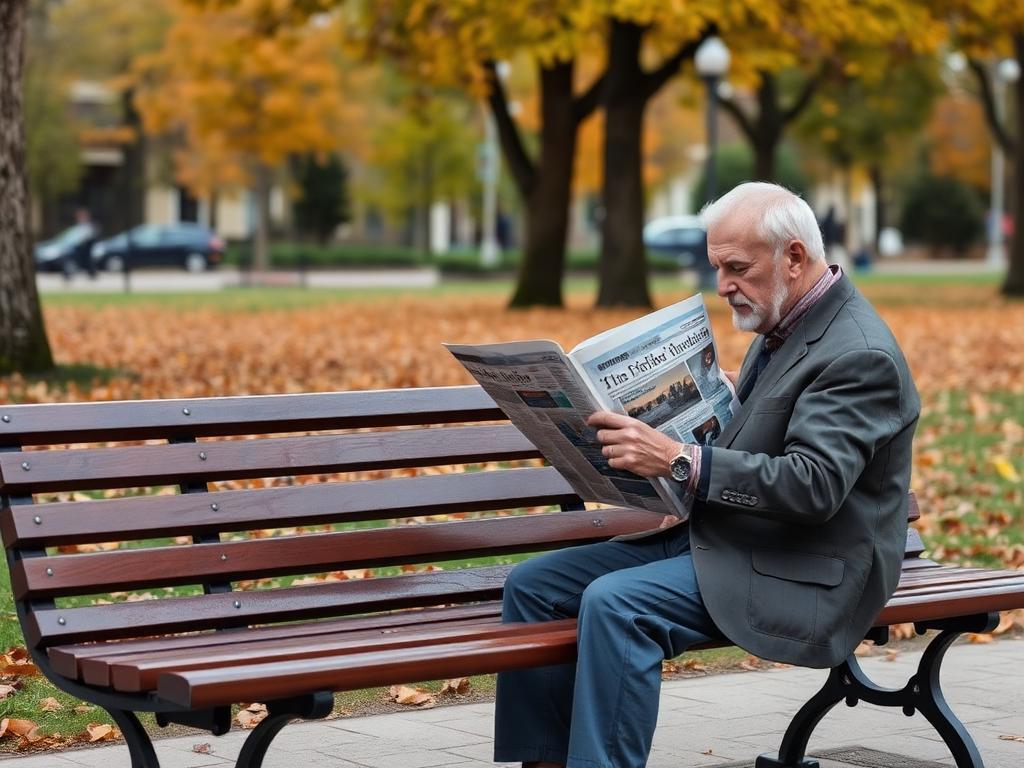
Candidate A — Reading on a park bench
Need help? Show prompts (try describing with no help first)
- • What can you see?
- • Where is the person?
- • What might they be reading about?
- • How do they seem to feel?
- • Do you enjoy reading outdoors?

Candidate B — Reading signs in an airport
Need help? Show prompts (try describing with no help first)
- • What can you see?
- • What are the people probably looking for?
- • How might they be feeling?
- • Why is reading signs quickly useful here?
- • Have you ever had to find information quickly in an airport?
Useful phrases
- • In the foreground I can see…
- • It looks as if…
- • They seem to be…
- • I imagine…
- • This might be…
Show model 1-minute description
In the photo I can see someone sitting alone on a park bench, reading a newspaper. It looks as if it's a quiet morning, because there aren't many people around. They seem completely relaxed, maybe reading just for pleasure rather than for information. I imagine this is part of their regular routine — perhaps every day before work.
Optional · Teacher-led
Teacher Activities
Run this as a drilling lab with a visible countdown timer for every task. The goal is to build automatic timing instincts, not to teach new content. ~47 min total
Keep it going · 10
Take-homeExtend it at home
Self-study — everything you need is included below. All four skills are covered so you keep the spiral going between lessons; pick the order that suits you.
Timed skim-and-scan drill — read a short article in 60 seconds (skim), then answer 3 questions by scanning (2 minutes).
Your response
0 words SavedMaterials included
Article
Questions (scan for these)
Attempt the task first, then check your answers.
Elimination log — practise the elimination strategy on 5 multiple-choice questions.
Your response
0 words SavedMaterials included
Questions
Task
Attempt the task first, then check your answers.
Strategy vocabulary self-test.
Your response
0 words SavedMaterials included
Complete the sentences
Attempt the task first, then check your answers.
Listening re-read — read the Leo/Mia dialogue aloud twice, noting every strategy phrase.
Your response
0 words SavedMaterials included
Dialogue
Tick if you hear it
Attempt the task first, then check your answers.
Wrap-up · 11
2–3 minWhat you can now do
- Reading speed comes mostly from strategy, not vocabulary size.
- Skim first for the general idea; scan afterwards for specific details.
- Budget roughly 7 minutes per Reading part and stick to it.
- If stuck, eliminate clearly wrong options, then make an educated guess.
- Never leave a PET Reading question blank — there's no extra penalty for guessing.
- Save double-checking for the end, not question by question.
Need more practice?
Optional · your lesson progress stays the sameDetail, gaps and cohesion
Practise this exam skill
How to attack each paper
Practise this exam skill
Habits vs right now
Practise this exam skill