
Exam Review Lab 08 —Writing 2 clinic
Choosing article or story, fast planning, writing to the mark scheme, timed rewrite. Revision only · recycles Modules 05–06 — no new language.
PET parts in this lesson · mixed-skill spiral
Why this lesson now? Exam-focus hour attached to Module 06.
CEFR Pathway · You are here
Exam Boost · Performance Session
A progress checkpoint, not a test.
Recycle this phase's language through challenges, mini-tasks and longer speaking turns. Aim for fluency, not perfection — replay anything, skip nothing.
Get ready · 01
5 minGet talking — no pressure
Look at a Writing Part 2 prompt. In 10 seconds, decide: article or story? What made you choose?
Do you usually plan before you write, or do you just start writing? Which works better for you?
Pick one target: choosing faster, planning tighter, or finishing on time.
Grammar recap · 02
8–10 minPast narrative tenses for stories (Modules 1–4)
Story = past simple for the main events, past continuous for background, past perfect for something before that.
PET Writing Part 2 stories are marked partly on range of tenses. Most candidates only use past simple, which is safe but limits their score. Adding ONE past continuous (background action) and ONE past perfect (an earlier event) shows range without adding risk, because these forms were already taught in Modules 1–4.
→ It was raining heavily when I left the house. (past continuous = background)
→ By the time I arrived, the film had already started. (past perfect = earlier event)
→ I ran to the bus stop, but I was too late. (past simple = main events)
→ I hadn't seen her in years, so I almost didn't recognise her. (past perfect)
→ While we were waiting, my phone suddenly rang. (past continuous + past simple)
Challenge 1.It ___ raining when we left the house.
Challenge 2.By the time I got there, the meeting ___ already started.
Challenge 3.I ___ to the shop, but it was closed.
Challenge 4.While I ___ dinner, the phone rang.
Challenge 5.She ___ never seen snow before that trip.
Build the sentence → spot the natural chunks → say it aloud → reply like a real conversation.
1.Rebuild the sentence — then say it aloud.
2.Rebuild the sentence — then say it aloud.
3.Rebuild the sentence — then say it aloud.
Quick check 1.Which tense shows BACKGROUND action in a story?
Quick check 2.Which tense shows something that happened BEFORE the main story event?
Vocabulary recap · 03
5–7 minRecycle your toolkit
read fast to get the general meaning
Skim a news headline now — say the topic in 5 words.
used to explain why something happens, referring back
Complete: 'The road was closed. For this reason, ____.'
a code used to identify a booking or order
Why is it useful to keep a reference number safe?
to reduce the number of possible answers
How do you narrow down your choices in a difficult question?
What to do
- 1.Revision only — every phrase here comes from Modules 5–6.
- 2.Match each one with its meaning.
Tap an item on the left, then tap its match on the right.
What to do
Sort the recycled phrases by the module where you first met them.
Activation · Personalise · Recycle
Reactivate Modules 5–6 language out loud — nothing new here, just faster recall.
Ask your partner
- Skim a news headline now — say the topic in 5 words.
- Finish: 'I love coffee. However…'
- Why might someone need flexible working hours?
"Complete: 'The road was closed. For this reason, ______.'"for this reason
Which of these Modules 5–6 phrases do you still forget under exam pressure? Why?
Write 25–35 words about your English progress using BOTH recycled phrases.
Pronunciation polish · 04
3–4 minStress on story 'turning point' words
Stress SUDDENLY, EVENTUALLY and AT THAT MOMENT harder than the rest of the sentence — they signal the story's shape to a listener too.
- • Everything was calm — and then, SUDDENLY, the lights went out.
- • We waited for ages, and EVENTUALLY the bus arrived.
- • AT THAT MOMENT, I realised I'd left my bag on the train.
- • IN THE END, it turned out fine.
Reading challenge · 05
8–10 minPET Reading Part 3 — The three-minute plan
Ask any experienced PET examiner what separates a good Writing Part 2 answer from a weak one, and most won't mention vocabulary or even grammar first. They'll mention planning. A story or article written without a plan almost always drifts — it starts well, loses direction in the middle, and either finishes too early or runs out of space before the ending.
The fix is a three-minute plan, done BEFORE writing a single sentence. For a story: decide the opening situation, the turning point, and the ending — three beats, no more. For an article: decide your two or three main points and one clear opinion. Three minutes feels like a lot to give up when you only have twenty, but it almost always pays for itself, because a planned answer needs far less time to fix at the end. Unplanned answers, by contrast, often need a full rewrite — which there usually isn't time for.
Challenge 1.According to examiners, what most often separates good and weak Writing Part 2 answers?
Challenge 2.What happens to a story written WITHOUT a plan?
Challenge 3.Why does the three-minute plan 'pay for itself'?
Q1.The text says vocabulary is the biggest factor in a strong Writing Part 2 answer.
Q2.A story plan should include an opening, a turning point, and an ending.
Q3.The writer thinks planning wastes valuable exam time.
What to do
PET Reading Part 1 — Read each notice and choose A, B or C. ~5 minutes.
WRITING COMPETITION
Entries must be a story OR an article, not both. Maximum 120 words. Late entries won't be marked.
1.What does the poster say about entries?
2.What does the teacher recommend?
Word count: aim for 100, not 200. Quality over quantity.
3.What does the sign suggest?
4.What must candidates do in Part 2?
PEER REVIEW
Swap your draft with a partner before the final version. Check content points first, spelling second.
5.What should students check FIRST?
Listening challenge · 06
8–10 minPET Listening Part 2 — Two students plan a Writing Part 2 answer (dialogue)
Listening audio
Tap play to listen. Replay as many times as you need.
Show transcript
Leo:OK, the prompt says 'Write a story that begins: It was raining when Maya left the house.' Article or story — obviously story, right?
Ana:Yeah, definitely — it literally gives you an opening sentence. Right, let's plan for three minutes before we write anything.
Leo:Opening: Maya leaves the house in the rain. Turning point — something unexpected happens. Ending — how it's resolved.
Ana:What if, at that moment, she realises she's forgotten her umbrella AND her phone? That's a nice small turning point.
Leo:I like that. And eventually, a stranger lends her an umbrella, and it turns out they know each other from school.
Ana:Perfect — that's the ending. Now let's actually write it, and stick to roughly 100 words.
Challenge 1.What kind of writing task does the prompt require?
Challenge 2.What does Maya forget, according to the plan?
Challenge 3.How does the story end?
What to do
Tick every planning phrase you hear in the dialogue.
Skills challenge · 07
5 minChoosing article vs story in under 10 seconds
If the prompt gives you an opening SENTENCE or a TITLE with a clear event, it's a story. If it asks for your OPINION or EXPERIENCE on a topic, it's an article.
Task
Candidates lose time debating which task to choose. Train the decision to be instant: stories have a narrative hook (an opening line, a title implying an event); articles ask a general question or invite opinion.
Example
Prompt A: 'Write a story that begins: The door slowly opened…' → clear event → STORY. Prompt B: 'What makes a good friend?' → general question → ARTICLE.
Writing challenge · 08
5 minShow what you can do
Q1.Type ONE word: 'It was raining ___ I left the house.'
Q2.Type ONE word: 'By the time I arrived, the film ___ started.'
Q3.Type ONE word: 'While I ___ cooking, the phone rang.'
Q4.Type ONE word: 'Choose ___ the story or the article.'
PET Writing Part 2 (story, ≈100 words). Prompt: Write a story that begins: 'It was raining when Maya left the house.' Plan for 3 minutes first (opening/turning point/ending). Use at least ONE past continuous, ONE past perfect, and 'suddenly' or 'eventually'.
Your writing draft
0 words SavedShow model answer & examiner comment
It was raining when Maya left the house, and she was already thinking about being late for her exam. She had forgotten her umbrella again, just like the week before. Suddenly, a stranger stopped beside her, holding out a spare umbrella with a smile. 'You looked like you needed this,' he said. At that moment, Maya realised she recognised him from her old school. They walked together, talking the whole way, and eventually arrived at the exam hall dry and laughing. From that day on, the rain didn't seem so bad after all.
Examiner comment
| 5 | All content points covered; consistent style; range of structures; minor errors only. |
| 3 | Content mostly covered; mostly suitable style; some range; errors don't stop the reader understanding. |
| 1 | Limited content; intrusive errors; very basic structures; under-length. |
What to do
- 1.PET Writing Part 1 — Reply to this email in about 100 words.
- 2.Cover ALL four notes.
Hi! I've got a Writing Part 2 story to plan and I'm stuck. Should I plan before I write, or just start? How long should the plan take? What THREE parts should a story have? And what's one good 'turning point' word I could use? Thanks! Priya
Your reply must cover:
- Recommend planning before writing
- Give a specific time (around 3 minutes)
- Name opening, turning point, ending
- Suggest one word (e.g. suddenly, eventually)
Show model answer
Hi Priya, definitely plan first — it really does save time later. I'd spend about three minutes on it, no more. A good story needs three parts: an opening situation, a turning point, and an ending. For the turning point, try using a word like 'suddenly' or 'at that moment' — it makes the change feel clear and dramatic. Once you've got those three beats, the actual writing goes really quickly. Good luck! Talk soon, Sam
Communication lab · 09
10–15 minTalk it out
PET Speaking Part 3 — discussion task (in pairs, ~3 minutes). Look at the visual prompt of story-planning steps and decide together which TWO steps matter most when you only have three minutes to plan.
Examiner
"Here are some steps for planning a Writing Part 2 story. Talk together about how useful each one is, then decide which TWO matter most."
Talk together about
Which TWO planning steps matter most with only three minutes?
Share opinions, agree and disagree — you do not have to talk only about yourself.
Ideas you could discuss
- Decide the opening situation
- Choose a turning-point word
- List extra vocabulary
- Plan the ending
- Count the exact number of words
Round off the discussion
Now decide together: which TWO would you choose, and why?
Useful discussion language
What to do
Choose the most natural Speaking Part 3 turn.
- AWhat do you think about spending three minutes planning before writing?
- B_______________
- ASo shall we say planning the opening and the ending matter most?
- B_______________
What to do
- 1.PET Speaking Part 1 — examiner-led interview (~2 minutes per candidate).
- 2.Short, natural answers — extend ONE sentence past the obvious answer.
Phase 1 — short factual questions
1.Examiner: "What's your name?"
2.Examiner: "Where are you from?"
Tip: Add ONE detail — a region, size, or famous thing.
3.Examiner: "Do you enjoy writing stories in English?"
Tip: Say yes/no, plus a reason.
4.Examiner: "What did you write about last time you had a writing task?"
Tip: Use past simple, then 'because' or 'for example'.
Phase 2 — extended question (aim for 3–5 sentences)
Examiner: "Tell me about a story you enjoyed reading or writing recently."
Tip: Aim for 25–35 seconds. What happened? Why did you like it? One specific detail.
Show model extended answer
Last month in class we had to write a story that started with someone missing a train. I decided to make it a comedy — the character eventually finds out the train had already gone the day before, because he'd got the date wrong. I really enjoyed writing it, mainly because it let me use 'eventually' and 'suddenly' in a natural way, which the teacher had shown us the week before.
What to do
- 1.PET Speaking Part 2 — 1 minute per candidate.
- 2.Describe the photo, then say what's probably happening and how the people might feel.
- 3.Use 'It looks as if…' and 'They seem to be…'.
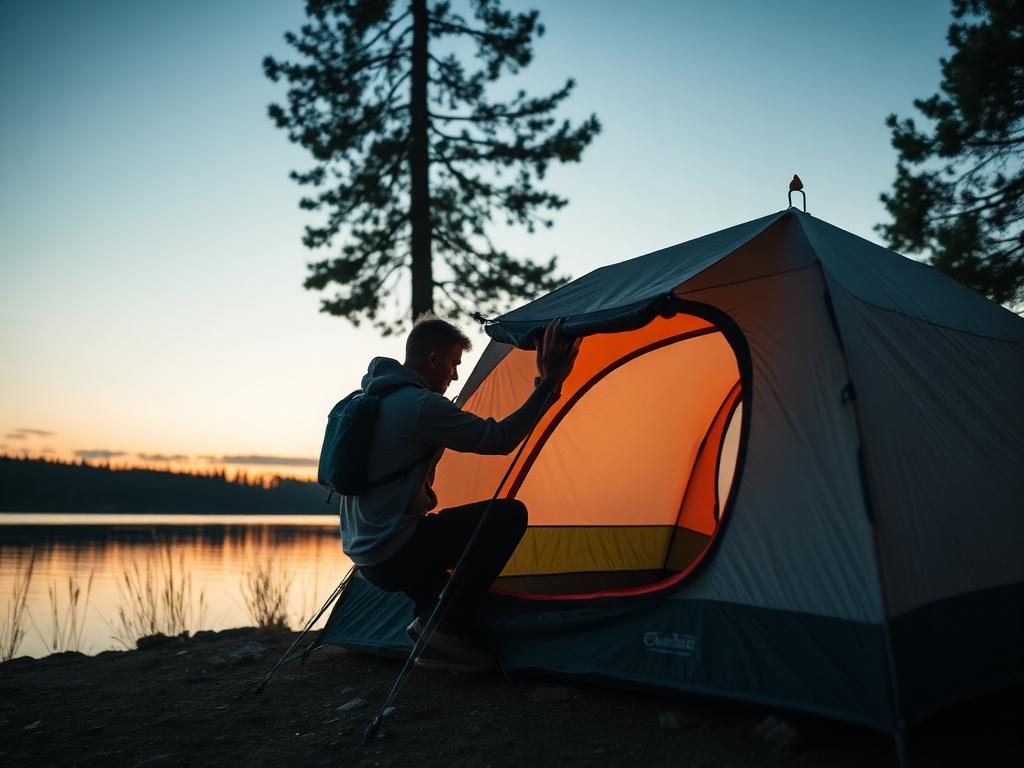
Candidate A — A campsite beside a lake
Need help? Show prompts (try describing with no help first)
- • What can you see?
- • What time of day might it be?
- • What are the people probably doing?
- • How do they seem to feel?
- • Do you enjoy camping trips?

Candidate B — A street food market stall
Need help? Show prompts (try describing with no help first)
- • What can you see?
- • What is the vendor probably doing?
- • How do the customers seem to feel?
- • What kind of food might they be selling?
- • Do you enjoy visiting food markets?
Useful phrases
- • In the photo I can see…
- • It looks as if…
- • They seem to be…
- • In the background…
- • I think they're probably…
Show model 1-minute description
In the first photo I can see a campsite beside a lake, with a few tents set up near the water. It looks as if it's early evening, because the light is quite soft. On the whole the people seem relaxed, although the man near the tent seems to be struggling with the poles.
Optional · Teacher-led
Teacher Activities
Run this lab as a real writing workshop — students should leave having actually planned AND written a full timed answer, not just discussed theory. Keep a visible clock for the timed rewrite. ~43 min total
Keep it going · 10
Take-homeExtend it at home
Self-study — everything you need is included below. All four skills are covered so you keep the spiral going between lessons; pick the order that suits you.
Article vs story sort — read the six prompts below and decide instantly which task type each one is.
Your response
0 words SavedMaterials included
Prompts
Attempt the task first, then check your answers.
Three-minute plan practice — plan (don't write) the story below in exactly 3 minutes using the opening/turning point/ending structure.
Your response
0 words SavedMaterials included
Prompt
Plan template
Sample plan
Timed rewrite — write the full 100-word story from your plan above in exactly 12 minutes. Then self-mark using the checklist.
Your response
0 words SavedMaterials included
Self-mark checklist
Listening recycling drill — read the Leo/Ana planning dialogue aloud twice. Tick every planning phrase from Modules 1–4.
Your response
0 words SavedMaterials included
Dialogue
Tick if you hear it
Attempt the task first, then check your answers.
Wrap-up · 11
2–3 minWhat you can now do
- Decide article vs story in under 10 seconds: an event/opening line = story; a question/opinion = article.
- Always plan for about 3 minutes before writing: opening, turning point, ending (story) or 2–3 points + opinion (article).
- Add ONE past continuous and ONE past perfect to a story for range, alongside past simple.
- Turning-point words (suddenly, at that moment) and ending words (eventually, in the end) shape a clear story.
- Check content points BEFORE checking spelling when reviewing a draft.
- A planned answer needs far less fixing at the end than an unplanned one.
Need more practice?
Optional · your lesson progress stays the sameChecking your writing
Practise this exam skill
Story and article language
Practise this exam skill
Telling a story in the past
Practise this exam skill